
No products in the cart.
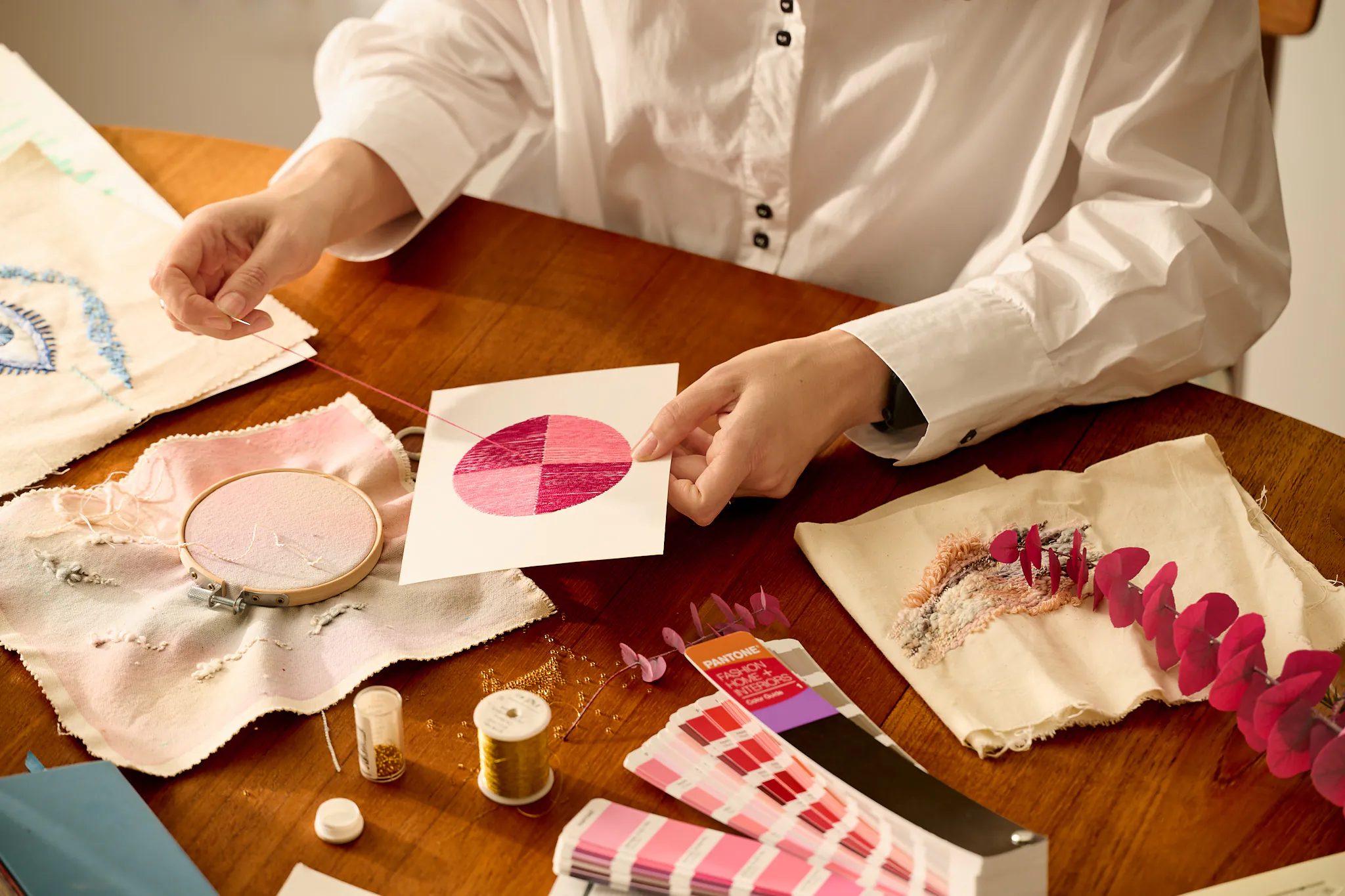
Embroidery, Slowness, and the Long Way Round. How Hand Stitching Became the Heart of My Collection
Embroidery is a craft you cannot force. You have to work with it, allow it time, let it find its own pace. That quality, resistant to speed and insistent on presence, is exactly why I came back to it, and why it became central to the work I make today.
WHERE IT STARTED: A SEED PLANTED IN INDIA
My love for embroidery did not begin in a studio. It began on a trip to India, where I spent time with a cousin who ran his own fashion and textile workshop. I watched artisans work with the tambour technique, a form of chain stitch embroidery done with a hooked needle, producing the most intricate, breathtaking surfaces I had ever seen. But I was not only watching. I worked alongside those artisans directly, creating embroidery samples and designing a small embroidered handbag collection with them. It was one of those experiences that stays in your hands as much as your memory.
I was completely in awe of the skill, the patience, the intimacy of the work. That time planted the first seed of a deep love for embroidery. It took years before I understood what to do with it.
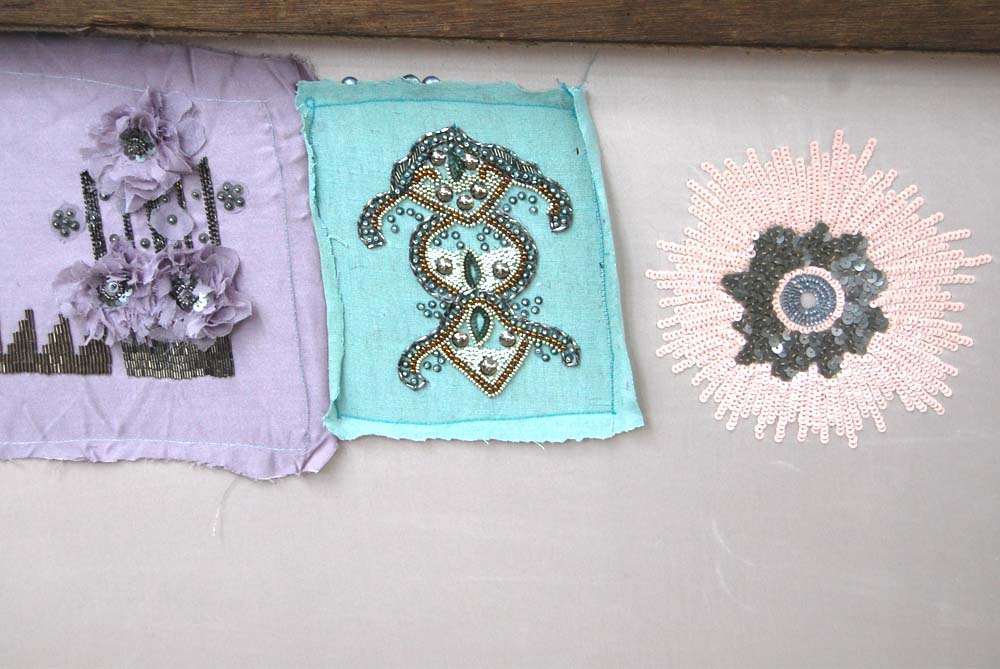
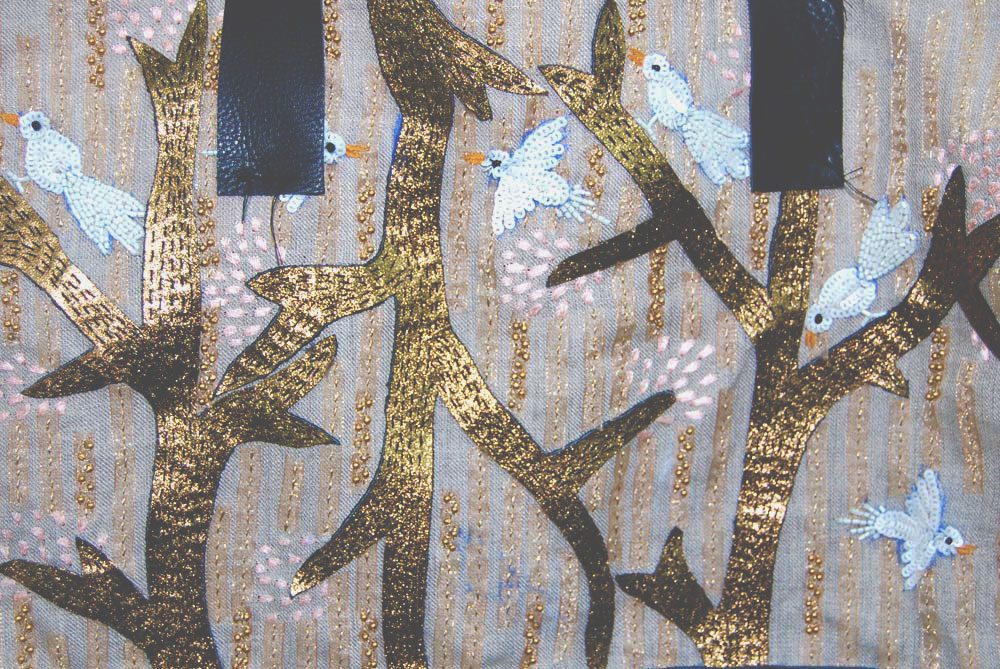
It was only later, after returning to Cyprus from London, that I picked up a needle and thread for the first time myself. I wanted to make something with my hands, something slow and tactile. Embroidery offered exactly that: a meditative practice, a textural result, and a way of being fully present with a material that does not allow you to rush.
I have always been the kind of person who can teach herself most things. I do not need someone to show me physically. I search, find references, try, fail and try again. Embroidery was no different. I learned by doing and gradually found my own style and voice within it.
WHAT THE PRACTICE ACTUALLY LOOKS LIKE
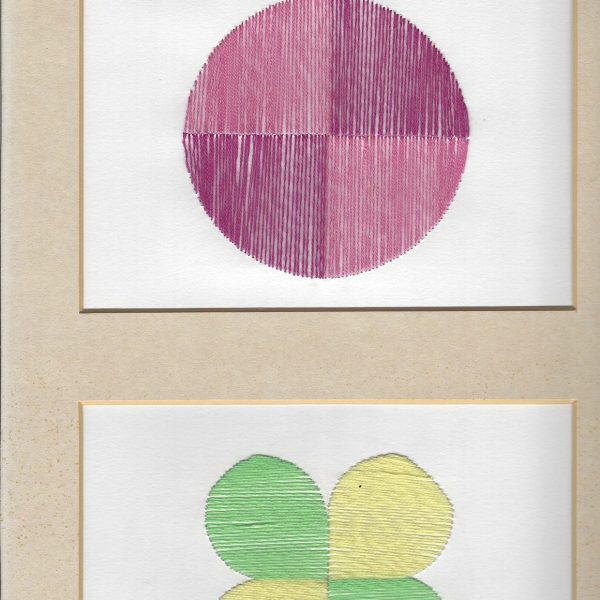
When I sit down to embroider, there is usually no fixed plan. I work primarily on plain cotton fabric, sometimes with paint already on the surface, building up layers before a single stitch is placed. I have also worked on card, which gives a pleasing rigidity for more structured geometric pieces, and more recently I have begun to explore incorporating thread into ceramics, stitching into solid structures, which opens up an entirely different set of questions about what embroidery can be.
The threads I use are a combination of cotton, metallic and wool. I love the contrast between them: the matte flatness of cotton against the glint of metallic thread, the softness of wool giving weight and texture. These combinations are not planned in advance so much as felt in the moment. I want the work to capture something I am experiencing, to bring out a feeling rather than illustrate a concept.
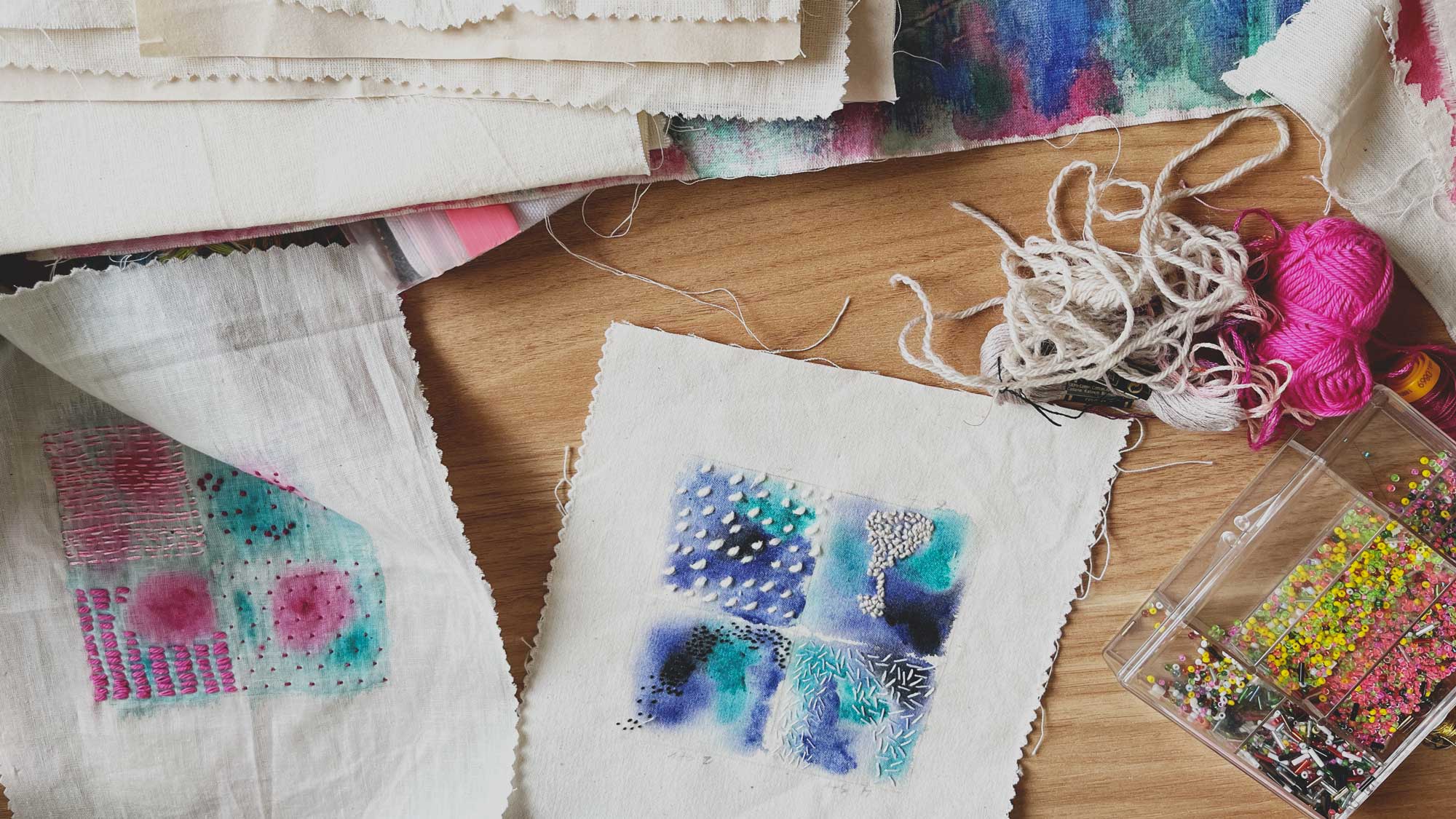
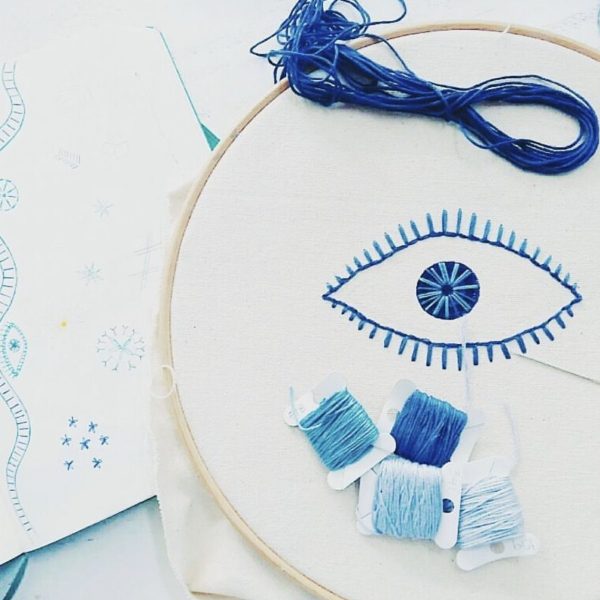
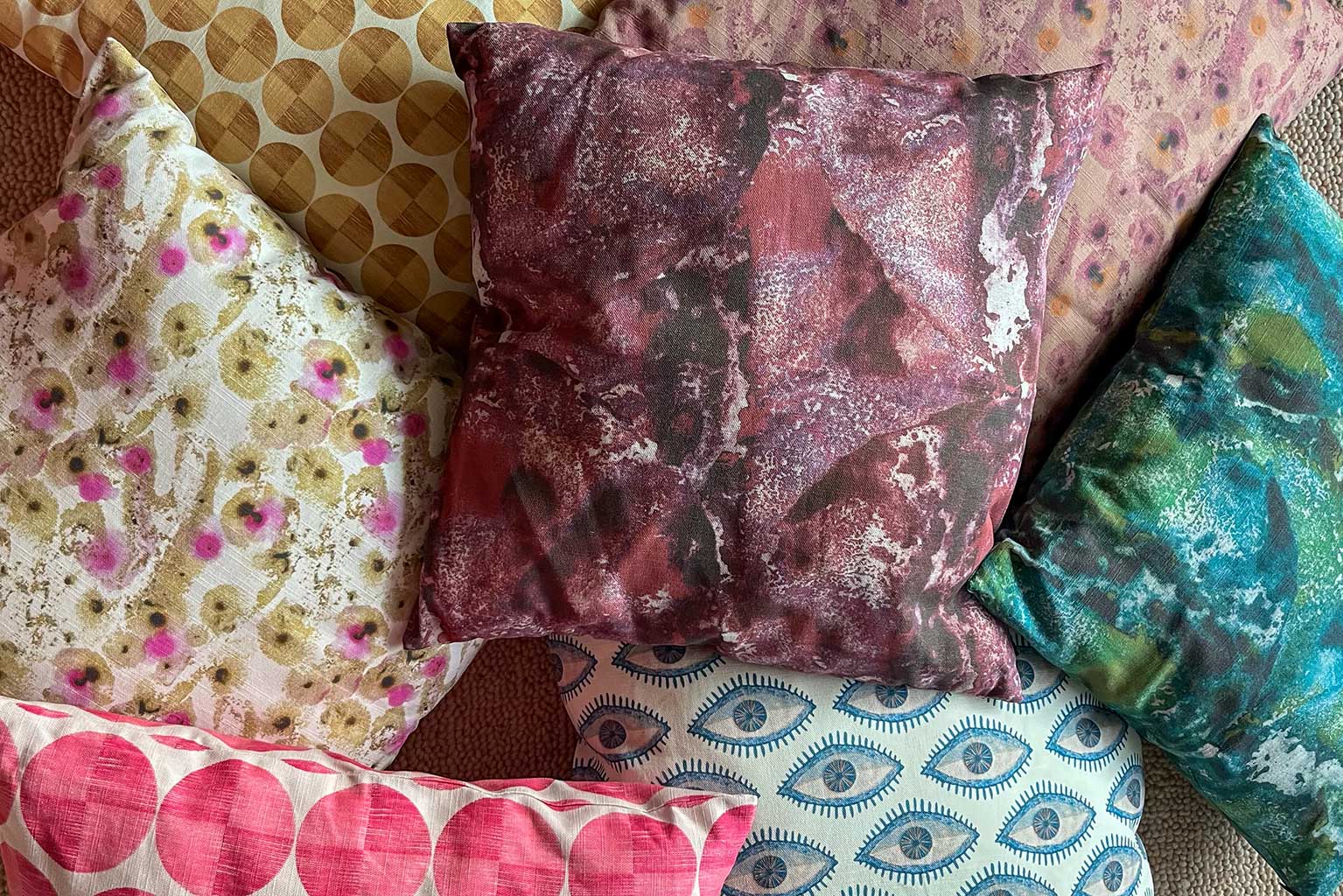
Two of the embroidery designs in this debut collection took a more structured approach. I was drawn to symbol and form: the eye, which has meant something across so many cultures and centuries as a window to someone’s soul, and the circle, which carries a sense of eternity and wholeness that feels almost pre-verbal. These choices are not always fully conscious. More often I am attracted to something, a shape, a motif, a quality of line, and I want to bring it to life. The meaning follows.
TEACHING AND WHAT IT TAUGHT ME
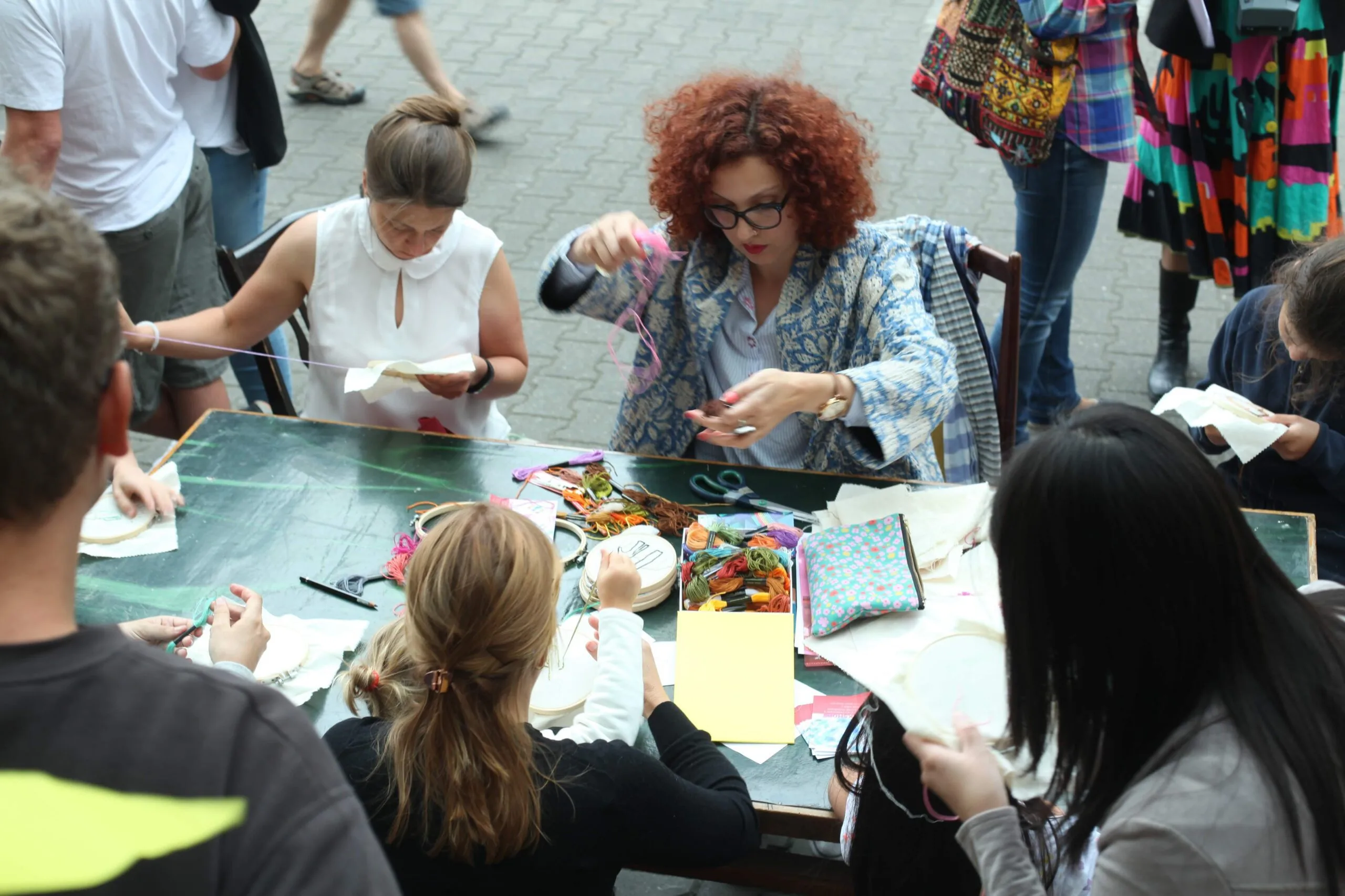
I never expected to teach embroidery, but I did, both in Cyprus and later in Berlin. Watching someone make their first stitches, seeing their excitement as something slowly emerges, whether a textile art piece or an upcycled t-shirt, reminded me of what this craft does to people who encounter it for the first time.
For my students, embroidery was a way to slow down, to learn something new with their hands and to be creative without needing prior experience or expensive equipment. The practice met people where they were and gave them something they had not known they were looking for.
Teaching deepened my own relationship to the work too. It clarified something I already believed: that this craft is not just for making objects. It is for sharing, technique, process, inspiration and community. That instinct to share is at the core of what I am building with this brand.
FROM HAND-STITCHED TO PRINTED TEXTILE: THE TRANSLATION
When I began developing the Thalia Botsari collection, I knew I wanted to experiment with how handmade art could become something people live with in their homes. The answer was digitising my embroidery work, scanning the original pieces and translating them into printed textile designs.
This process is more delicate than it sounds. Embroidery is deeply textural. The thread sits above the surface of the fabric, catching light, casting tiny shadows and changing with the angle of the room. A scanner cannot fully capture that dimensionality. I tried many different approaches before finding a method that preserved what matters most: the layering of threads, the slight imperfection of a hand-made mark and the sense of depth that a flat printed image so easily loses.
Highly textural embroidery is very difficult to digitise convincingly. It works best with flatter threads, where the texture reads in the weave and the colour rather than in the physical height of the stitch. Scale also turned out to be crucial: too large and the translation loses its realism; too small and the texture disappears entirely. Finding that range was its own long process of experimentation.
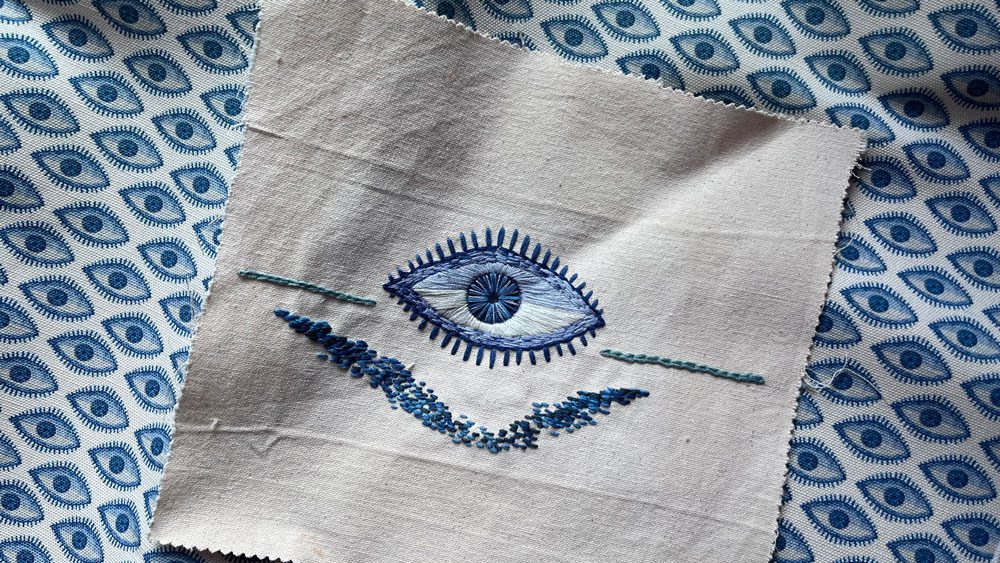
After scanning, each piece requires careful digital work, cleaning, colour correction and bringing out the right finish, before it is ready to go into repeat as a print. The resulting files are then printed onto natural linen and linen-cotton fabrics, using water-based inks certified to GOTS 6.0 and OEKO-TEX 100 standards, produced in Europe.
When I look at the finished printed piece, it is a combination of the old and the new. Flatter than the original, of course, but I can still see the depth. I know the process behind every mark. And I believe that quality comes through, even without explanation.
WHAT I HOPE IT GIVES YOU
More and more people are seeking a break from the relentless digital life we are all living, a need that only deepened after the pandemic, when many of us rediscovered what it meant to be present with something that was not a screen. Embroidery speaks to that need directly. You can learn it, make something with it, give a kit to someone you love, or simply bring a piece of it into your home and live with it.
When someone buys a cushion or a length of fabric from this collection, I hope they think of the slow process behind it, the hours of stitching, the experimentation, the decisions made mark by mark. I hope it does not feel like another commercial item. I hope it tells a story, from me to them, that they carry with it for a long time.
This collection is a beginning. I look forward to bringing more embroidery work into future collections and perhaps, one day, to collaborating with the craftspeople around the world who first inspired me. There are artisans whose hands hold knowledge I am still learning from. That conversation feels like it is just beginning.
All pieces are printed on natural linen or cotton/linen in Europe from original hand-stitched designs. Browse fabric by the metre or shop the handmade cushions ,or explore the full collection below.
Leave a Reply